Pages

Showing posts with label Forensics. Show all posts

Friday, 12 November 2021

Forensics

Forensic science, today our only task was to summarise everything up that we did on our first week of a passion project. Explaining what we have focussed on and how it fits into forensic science, we have to include crime scenes, the law, evidence, and observation skills. Then afterward we have to try and use the lawyer paragraph structure to write our summary, which will be our main goal this week.

Lawyer Paragraph

~ State your point - say what you are trying to convince us of

~ Why it matters - Say why your point is important: 1-2 sentences

~ Evidence - Deliver your evidence to prove this in 3-4 sentences.

~ Sum up - Write a simple sentence and drive home your idea: 12 words or less.

My paragraph:

Forensics is all about scientists comprehending out and collecting evidence from a crime scene. One of the main importance of forensics science is having the right data. You can't find the suspect when you don't have the evidence in your hand, proof s about determining whether a crime has been perpetrated. You need to commemorate properly to find the right evidence. This matters because forensic sciences are a critical way of the criminal justice system. It is important because without evidence and without a forensic scientist, then you will not be given the justice that you needed. This examines and analyzes evidence from a scenario of a crime scene, develops injective findings that are able to assist the investigation and pursuance of perpetrators of learning an innocent person from suspicion. Summing everything up, forensic science plays a critically essential role in our lives and even in society. It is about intelligence and evidential to assist in the delivery of justice. Forensic ensures our safety and even public health.

  • What is Forensic Science? Why do we need it?

  • Who are forensic scientists? 

    • What are some of the jobs they do?

    • What types of evidence to they collect from crime scenes? 

    • What is genetic profiling?

The criminal justice system relies heavily on forensic science. Forensic scientists study and analyze evidence from crime scenes and other locations in order to produce objective results that can aid in the investigation and prosecution of criminals, or exonerate an innocent person. Evidence is collected from crime scenes by crime scene investigators. By gathering and evaluating evidence, forensic science technicians assist criminal investigations. Many technicians are experts in either crime scene investigation or laboratory testing.

Forensic science is essential to a functioning justice system, which is a cornerstone of civil society. Other areas where forensic science plays a significant role include the investigation of local and international incidents, national security, and public health and safety. One of the most crucial components of any criminal investigation is forensic science, which can help authorities accomplish everything from positively identifying a suspect to pinpointing when and how a crime occurred. The criminal justice system relies heavily on forensic science.


Criminalistics, or forensic science, is the application of science to criminal and civil laws, primarily on the criminal side during criminal investigations, as defined by legal criteria of admissible evidence and criminal procedure. 


During the course of an investigation, forensic scientists collect, preserve, and analyze scientific evidence. While some forensic scientists go to the crime scene to collect evidence, others work in laboratories, analyzing materials brought to them by others. Others work on financial, banking, or other numerical data analysis for use in financial crime investigations, and they can be employed. Forensic scientists use their scientific knowledge and abilities to help the police solve crimes and discover or eliminate criminal offenders. They may also do research to improve or enhance forensic techniques.


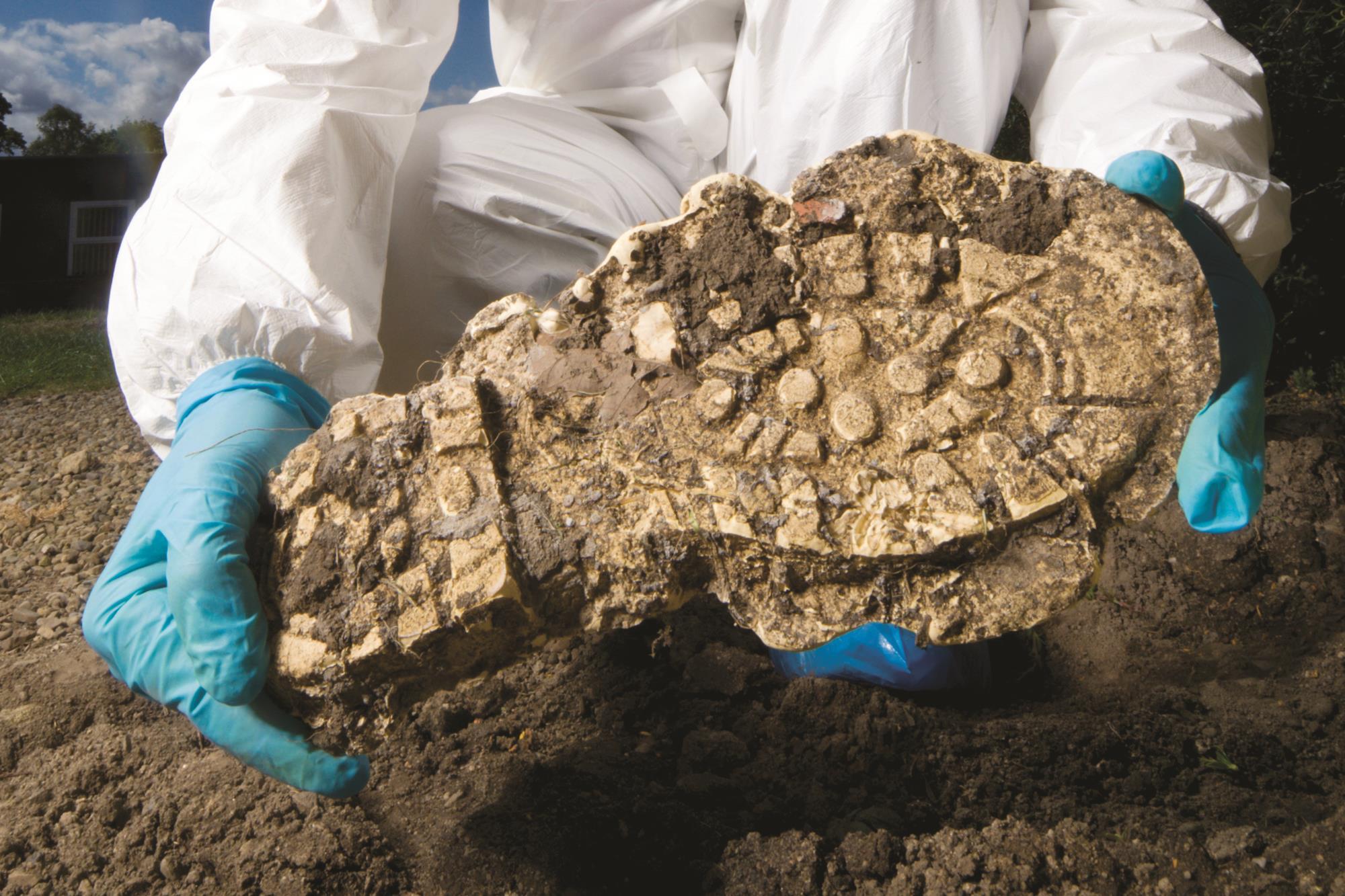
Fingerprints, footprints, tire tracks, blood and other bodily fluids, hairs, fibers, and fire debris are all collected by crime scene investigators. The National Institute of Justice (NIJ) funds projects that aim to improve: Blood and other bodily fluids are identified at the scene. Drug and explosive detection in the field. Fingerprints are by far the most prevalent sort of physical evidence found at most crime scenes, but there are a variety of other types of evidence to identify and gather as well, including biological and trace evidence, and also evidence left by the use of firearms or other weapons. At crime scenes, forensic experts gather or process trace evidence such as hair, skin, blood, or sperm samples. Hair, bodily fluids, and fibers are just a few examples of what might be found at a crime scene. 


There is a small quantity of DNA in the human genome that is unique to each individual. It is feasible to create a character profile of DNA bands for individuals by cutting a sample of DNA into fragments and dividing the fragments by size. 


DNA profiling is a technique that can be used to determine paternity or to assist in the investigation of crimes where the suspect may have left a sample of body tissue at the crime scene. 


It can also be used to compare distinct species for categorization reasons in other organisms.


DNA is frequently found at crime scenes. It can be found in the blood, the skin, and even the hair. Once the victim's DNA has been retrieved and suspects have been identified, DNA profiling can be used to pinpoint a suspect's location at the crime scene. The DNA profiles of both the newborn and its mother must be known in order to determine paternity. For paternity to be established, every band detected in the baby's DNA profile that cannot be attributed to the mother must also be present in the father's DNA profile.


Why?


DNA profiling is a highly sensitive and precise approach for identifying individuals and finding relationships between them. It's also become a necessary instrument in the legal world, where it's used in criminal investigations, paternity and custody issues, and immigration proceedings. This procedure is known as DNA profiling, and it is used to determine paternity. It can aid in the investigation of crimes in which the culprit may have left a sample of body tissue at the scene. It can also be used to compare distinct species for categorization reasons in other organisms.


Their Jobs:


Generalist forensic science technicians, often known as criminalists or crime scene investigators, gather evidence at crime scenes and conduct scientific and technical analyses in laboratories or offices. They may also evaluate DNA, drugs, and other evidence acquired at crime scenes using computers.


Technicians are indeed the utility players of the forensic science field. They aid in the gathering of evidence, conducting analyses, and assisting in the investigation of crime scenes. Often termed scene of the crime technicians or crime scene investigators, forensic science technicians undertake much of their work either on the scene or in a laboratory. 


Technicians that specialize in evidence collecting must have a keen eye for detail. They may also assist other forensic scientists and act as liaisons with other professionals.


Despite their celebrity and acknowledged ties to organized crime, several of the most well-known gang leaders in the United States were eventually brought to court for financial and tax offenses. The first forensic accountants were important in bringing Al Capone to justice. 


Forensic accountants are trained to follow the money trail and specialize in financial crimes. They work to prevent fraud and safeguard bank accounts. In addition, forensic accountants aid courts in determining awards and damages, as well as identifying and investigating terrorist funders.


Engineers that work with machines and structures are known as forensic engineers. When a bridge collapses for no apparent reason, forensic engineers investigate the cause and discover the cause. They can detect foul play and distinguish it from structural breakdown caused by aging and neglect.


Wednesday, 10 November 2021

Is it a crime ?

 Kia Ora everyone. We started our passion projects, and this will be my first blog and this is all about forensics which is also about science. Our very first task at this point in time was to do a task, around is it a crime. We are given 6 different pictures, and we have to tell if it is either a crime or not. In this task, we can be working in a group but I have chosen to do it alone, but discuss it with a friend of mine. 

First picture -   But it would not be considered as a crime when the owner of the stuff is giving them permission to take it and do whatever they want. Larceny is another term for theft. In general, the offense occurs when someone unlawfully removed and carries away another person's property with the goal to permanently deprive the owner of it. You've been charged with either petty theft or big theft if you've been arrested for theft.


A hit-and-run is a crime that occurs after an accident, rather than as a result of it. A hit and run occur when a driver involved in a car accident fails to: stop at the scene of the accident. Offer assistance to anyone injured as a result of the accident. You may face charges of animal cruelty or failure to inform property owners of harm. Although laws differ from state to state, you should always come to a halt after striking a dog or other domestic animal. If the owner is there, you may provide them with your information as you would in the event of a car accident.


Robbery is defined as the illegal seizure of another's property by force or threat of force. Robbery does not occur without the use of force or the threat of force. Theft is a broad phrase that encompasses all theft offenses, as well as burglary and robbery. The taking of another's property by force or threat is known as robbery. Larceny by threat or force is also a term used to describe it. Robbery is a more serious crime than many other theft offenses because it involves injury or the fear of injury


As you can see in the image of this picture, we can tell that someone was dying at the hospital bed. Well, it would be considered a crime when someone tends to commit and murder the person with poison. Just then, it wouldn't be called a crime when she/he was just taken from the above without no one knowing. For me, it actually depends on the situation of the person, because police and doctors can tell what has actually happened to the patient. Poisoning food, drink, medicine, or water that the criminal knows will be consumed by humans is a crime. 


In the picture, this would be considered a crime because the Trace Evidence Unit (TEU) searches for and examines various types of trace materials that may have been transferred during a violent crime. Human hair, animal hair, textile fibers and fabric, rope, earth, glass, and architectural materials are all examples of trace materials. Also to support my idea, we can tell that someone has murdered that person because of the blood on the left side of the chest. There's a high possibility that the murderer stabbed or either shot the innocent person. 


In the last picture, this wouldn't be considered a crime. Because it is both of their faults, that two drivers accidentally hit each other but if it is only one driver who didn't do it in purpose then. She/he would be responsible for the damage. Then, on the other hand, it would be a crime when an assassin was asked to do it on purpose just because of the money, it would be a crime because it can sometimes be called murder. 
When two cars collide while pulling out of a parking area, neither has the right of way. This means that each driver is in charge of his or her vehicle's movements. Then all parties are equally accountable and should either agree to split the whole damage bill or fix their own vehicles. 


Tuesday, 26 March 2019

Forensics.

Forensics

1. What is the definition of forensic science?
Well forensic definition was a describe scientific methods that is used in investigate crimes. When you describe something as forensic it was usually mean that is has to do with finding evidence to solve the crime and it's fro the technique to the investigation of crime. 
2. Name 5 different kinds of activities used in forensic sciences and find a picture for each.
1. You can use Fingerprints 
Image result for Forensic fingerprints
2. You can use Footprints 
Image result for Forensic footprints
3. You can use the D.N.A
Image result for Forensic DNA
4. Also the Ballistics
Image result for forensic ballistics
5. Investigating
Image result for forensics investigator

3. Name 5 jobs that would use forensics to investigate crime 
- Investigator
-Chemist 
-Science, Technician
- Photographers
-Document Examiner.

Finger prints

Aim: To look at the different types of fingerprints.

Material: 

  1.   You will need a Balloon ( any type of balloon)
  2.   Ink Pad for you finger.
  3.   Finger
  4.   Magnifying glass to check your fingerprints
  5.   Wipes to erase the finger when you've done it.

Steps

  1.   The first thing you have to do was get a balloon and a ink pad.
  2.   After you have them you have to put your finger into the ink pad.
  3. Before you put your thumb into the balloon make sure that it's not dry and inflated, and then you quickly and properly place your thumb to the balloon.
  4.   Then after that let it dry.
  5. So while the ink is trying to dry into the balloon try to blow the balloon carefully and reminder don't pop that balloon.   
  6.   After try to check what type of finger prints do you have or maybe you can use the magnifying glass if you want it.
  7. Then after those thing you can write a investigation with your group. 
  8.   You can erase the fingerprints on the balloon and clean your finger and your thumb.


Image result for fingerprint types

Record the types of fingerprints from those in your group.

Name
Fingerprint 1 ( Thumb)
Fingerprint 2 (finger)
SkylerLoop Index finger:Loop 
RieyaLoop Ring finger:Whorl 
LhysetteLoop Index finger: Loop 


Questions:
Do people always have the same type of fingerprint on their thumb and index finger?

No because we don't have the same size of a hand and we are all different like in my group we don't have the same type of our fingerprint, but most of us have the same type of a fingerprints.
What was the most common type of fingerprint in your group?

I think it was the Loop because me, Skyler, and Rieya have the same type of fingerprints of our thumb and into our index finger me and Skyler have the same thing but if Rieya also pick the same thing I think she will also get the Loop. Rieya pick here ring finger and it was type of Whorl.

Hidden fingerprints:

Aim: To learn how to lift hidden fingerprints from an object.

1. Lifting and Gathering fingerprints.

Equipment:
  1.   You need a Brush 
  2.    White powder
  3.    Magnifying glass 
  4.  Tape  
  5.  clear plastics files 
  6.    white powder.
Method; 

  1.   First go and get white powder and a clear plastic file and a brush.
  2. So the first thing  you need to do is to put your finger in the white powder and press it on the clear plastic file.
  3.  put a thin layer of white powder and use the brush to spread it to the plastic file.
  4.  After that you need to get  tape put it on the finger print that you dis you have to do it so the finger print that you did are going to stuck to the tape that you made
  5.  After that take a picture of it and write somethings of what you see.
 Here is the picture of the prints:

Conclusion Questions:

Did you manage to lift clear fingerprints?
Yes because I took it of carefully so the fingerprints that I did will not going to disappear because at my first try the tape cut off because I did fast and I didn't even hold the clear plastic folder so it kinda took me a lot of times to make it clear fingerprints. 

What could you do to improve your results next time?
I think I will push hard my finger to the folder so it will be more clear and only put a thin layer of the white powder because on the other fingerprint that I did there was a lot of layer of the white powder, and also I think I have to listen carefully because I kinda miss some of the explanation.

Why do you think fingerprints are useful to crime scene investigators?
Because I think fingerprints are important task in forensic science and I think it was a branch of science that helps criminal investigations by collecting and analysing evidence from crime scenes. Each fingerprint pattern is unique to a specific person, and therefore a very reliable way of identifying a suspect.