Pages

Showing posts with label Science. Show all posts

Friday, 12 November 2021

Forensics

Forensic science, today our only task was to summarise everything up that we did on our first week of a passion project. Explaining what we have focussed on and how it fits into forensic science, we have to include crime scenes, the law, evidence, and observation skills. Then afterward we have to try and use the lawyer paragraph structure to write our summary, which will be our main goal this week.

Lawyer Paragraph

~ State your point - say what you are trying to convince us of

~ Why it matters - Say why your point is important: 1-2 sentences

~ Evidence - Deliver your evidence to prove this in 3-4 sentences.

~ Sum up - Write a simple sentence and drive home your idea: 12 words or less.

My paragraph:

Forensics is all about scientists comprehending out and collecting evidence from a crime scene. One of the main importance of forensics science is having the right data. You can't find the suspect when you don't have the evidence in your hand, proof s about determining whether a crime has been perpetrated. You need to commemorate properly to find the right evidence. This matters because forensic sciences are a critical way of the criminal justice system. It is important because without evidence and without a forensic scientist, then you will not be given the justice that you needed. This examines and analyzes evidence from a scenario of a crime scene, develops injective findings that are able to assist the investigation and pursuance of perpetrators of learning an innocent person from suspicion. Summing everything up, forensic science plays a critically essential role in our lives and even in society. It is about intelligence and evidential to assist in the delivery of justice. Forensic ensures our safety and even public health.

  • What is Forensic Science? Why do we need it?

  • Who are forensic scientists? 

    • What are some of the jobs they do?

    • What types of evidence to they collect from crime scenes? 

    • What is genetic profiling?

The criminal justice system relies heavily on forensic science. Forensic scientists study and analyze evidence from crime scenes and other locations in order to produce objective results that can aid in the investigation and prosecution of criminals, or exonerate an innocent person. Evidence is collected from crime scenes by crime scene investigators. By gathering and evaluating evidence, forensic science technicians assist criminal investigations. Many technicians are experts in either crime scene investigation or laboratory testing.

Forensic science is essential to a functioning justice system, which is a cornerstone of civil society. Other areas where forensic science plays a significant role include the investigation of local and international incidents, national security, and public health and safety. One of the most crucial components of any criminal investigation is forensic science, which can help authorities accomplish everything from positively identifying a suspect to pinpointing when and how a crime occurred. The criminal justice system relies heavily on forensic science.


Criminalistics, or forensic science, is the application of science to criminal and civil laws, primarily on the criminal side during criminal investigations, as defined by legal criteria of admissible evidence and criminal procedure. 


During the course of an investigation, forensic scientists collect, preserve, and analyze scientific evidence. While some forensic scientists go to the crime scene to collect evidence, others work in laboratories, analyzing materials brought to them by others. Others work on financial, banking, or other numerical data analysis for use in financial crime investigations, and they can be employed. Forensic scientists use their scientific knowledge and abilities to help the police solve crimes and discover or eliminate criminal offenders. They may also do research to improve or enhance forensic techniques.


Fingerprints, footprints, tire tracks, blood and other bodily fluids, hairs, fibers, and fire debris are all collected by crime scene investigators. The National Institute of Justice (NIJ) funds projects that aim to improve: Blood and other bodily fluids are identified at the scene. Drug and explosive detection in the field. Fingerprints are by far the most prevalent sort of physical evidence found at most crime scenes, but there are a variety of other types of evidence to identify and gather as well, including biological and trace evidence, and also evidence left by the use of firearms or other weapons. At crime scenes, forensic experts gather or process trace evidence such as hair, skin, blood, or sperm samples. Hair, bodily fluids, and fibers are just a few examples of what might be found at a crime scene. 


There is a small quantity of DNA in the human genome that is unique to each individual. It is feasible to create a character profile of DNA bands for individuals by cutting a sample of DNA into fragments and dividing the fragments by size. 


DNA profiling is a technique that can be used to determine paternity or to assist in the investigation of crimes where the suspect may have left a sample of body tissue at the crime scene. 


It can also be used to compare distinct species for categorization reasons in other organisms.


DNA is frequently found at crime scenes. It can be found in the blood, the skin, and even the hair. Once the victim's DNA has been retrieved and suspects have been identified, DNA profiling can be used to pinpoint a suspect's location at the crime scene. The DNA profiles of both the newborn and its mother must be known in order to determine paternity. For paternity to be established, every band detected in the baby's DNA profile that cannot be attributed to the mother must also be present in the father's DNA profile.


Why?


DNA profiling is a highly sensitive and precise approach for identifying individuals and finding relationships between them. It's also become a necessary instrument in the legal world, where it's used in criminal investigations, paternity and custody issues, and immigration proceedings. This procedure is known as DNA profiling, and it is used to determine paternity. It can aid in the investigation of crimes in which the culprit may have left a sample of body tissue at the scene. It can also be used to compare distinct species for categorization reasons in other organisms.


Their Jobs:


Generalist forensic science technicians, often known as criminalists or crime scene investigators, gather evidence at crime scenes and conduct scientific and technical analyses in laboratories or offices. They may also evaluate DNA, drugs, and other evidence acquired at crime scenes using computers.


Technicians are indeed the utility players of the forensic science field. They aid in the gathering of evidence, conducting analyses, and assisting in the investigation of crime scenes. Often termed scene of the crime technicians or crime scene investigators, forensic science technicians undertake much of their work either on the scene or in a laboratory. 


Technicians that specialize in evidence collecting must have a keen eye for detail. They may also assist other forensic scientists and act as liaisons with other professionals.


Despite their celebrity and acknowledged ties to organized crime, several of the most well-known gang leaders in the United States were eventually brought to court for financial and tax offenses. The first forensic accountants were important in bringing Al Capone to justice. 


Forensic accountants are trained to follow the money trail and specialize in financial crimes. They work to prevent fraud and safeguard bank accounts. In addition, forensic accountants aid courts in determining awards and damages, as well as identifying and investigating terrorist funders.


Engineers that work with machines and structures are known as forensic engineers. When a bridge collapses for no apparent reason, forensic engineers investigate the cause and discover the cause. They can detect foul play and distinguish it from structural breakdown caused by aging and neglect.


Tuesday, 7 September 2021

Current Electricity

 For science, we have another research to do, and last week we looked at Static electricity this time we're learning more about current electricity. Current is the passage of electrical charge carriers, but usually, electrons are the most prevalent charge carriers, are negative. The progress from negative to relatively positive points. Electric current can be either direct or alternating. Let say in a short sentence, the current is a mass of the amount of energy transferred over a period of time. Because of the way electrons move, current electricity is called that. Like a river current, they always "flow" in one direction. As electric current can pass through conductive materials.  For this task, we again have to answer questions about the current electricity. 

1. What is the particle that moves in a wire?

Because charged particles carry an electric charge, an electric current is a flow of charged particles. Charge carriers are moving particles, and different sorts of particles can be found in different conductors. The electrons were the ones who are flowing through a wire and it was used as a charge carrier in electric circuits. Ions are charged carriers in an electrolyte, while ions and electrons are charge carriers in an ionized gas (plasma). The ampere is the SI unit of electric current, which is defined as the passage of electric charge across a surface at one charge density per second. Mobile electrons are charged particles that move along wires in a circuit. Positive test charges are pushed in the direction of the electric field within a circuit, by definition. As a result, electrons that are negatively charged flow in the opposite direction of the electric field. While electrons are the charge carriers in metal wires, they can be positive, negative, or both in other circuits.


2. If there is a high current in a circuit what does this mean?

 Its current charge rate is the rate with which a point on the circuit is crossed. In a circuit, several columns across the cross-section of the wire, leading to a high current. A large current when carriers are tightly packed in the wire, no high force is needed for a high current. In many other words, carriers do not have to travel a long distance in a single second rather than a big number of them must pass through the cross-section. That isn't all about how far the charges travel in a second, but how far the charges travel across the cross-section of the circuit.  


3. How does electricity work to heat up a stove?


There are usually about four or five heating element on your stove that has its own control switch. Heat is produced when an electric current flows down each leg and collides in the heating element. This circuit also has a temperature switch, which allows you to simply control the heat output of your electric stovetop. When the temperature has reached its point, the circuit closes and no current is provided to the heating element. However, if the temperature drops too low, the circuit will close again to provide power. An electric stove is powered by coils. Electric stovetops, unlike gas stoves, do not emit a flame. An electric current, on the other hand, activates a heating element. If your stove includes coils, heat will be transferred straight from the coils to your cookware.


4. Where is DC electricity used? Where is AC electricity used?

Solar cells, batteries are the most frequent sources of this type of power. DC power is commonly utilized in low voltage applications such as battery charging, automobile and airplane uses, and other low voltage, low current applications. Any electrical gadget that uses a battery as a power source uses direct current. It is also used to charge batteries, which is why rechargeable gadgets such as laptops and mobile phones need an AC adapter that converts alternating current to direct current.


AC electricity is often used to power our televisions, lights, and computers. The direction of the current in alternating current electricity alternates. AC electricity is superior to DC electricity for supplying electricity, owing to the ability to transform voltages. The way it changes the direction of the flow, on the regular basis is called alternating current. . As a result, the voltage level reverses in lockstep with the current. AC is used to power homes, businesses, and other structures.


Electrons have an electric charge that is negative (-). Because opposite charges attract, they will gravitate towards a region with positive (+) charges. In an electric conductor, such as a metal wire, this movement is facilitated.


Connecting a wire from a battery's negative (-) terminal to its positive (+) terminal causes negatively charged electrons to race through the wire towards the positively charged side. A similar thing happens with a direct current generator, where the movement of coiled wire through a magnetic field drives electrons out of one terminal and attracts electrons to the other. A somewhat different design alternates the push and pulls of each generator terminal using an AC generator. The final outcome of the way electricity in the wire moves in one direction for a short amount of time before it alternates its direction when the generator changes its position. 


Tuesday, 24 August 2021

Static Electricity

Hello everyone, well currently New Zealand is on lockdown again cause of a new virus called Delta. So every student will be working from home, again. For this blog, in Science, we are moving on to a new topic called Static Electricity. It might sound a bit familiar to some people, but I'm getting excited to know more about electricity and I will also be learning about new things such as electrons and protons. Electricity is a form of energy produced by the presence of charged particles ( such as electrons and protons ), either statically as a charge accumulation or, dynamically as a current. For this topic, we have a new task and that is to answer these 4 questions.

1. What are the 3 particles that makeup everything? Which ones have positive and negative charges?

Atoms are the building blocks of all physical objects. Protons, electrons, and neutrons make up an atom. Protons have a positive charge -the nucleus is located in the center of each atom. Negatively charged electrons orbit the atom's nucleus. When energized protons pass close to orbiting electrons, their positive charge attracts the negatively charged electrons, causing them to fall out of their orbits. Electrons have a negative charge - electrons are subatomic particles that orbit an atom's nucleus. They usually have a negative charge and are significantly smaller than the atoms' nucleus. While neutrons are neutral. As a result, everything is made up of charges. Charges that are opposite each other attract each other (negative to positive). chares that are similar repel each other ( positive to positive or negative to negative). The majority of the time, positive and negative changes in an object are balanced, making it neutral. The effect of an imbalance between negative and positive charges in an object is static electricity. Certain materials can transfer negative charges, or electrons, by rubbing against one another. For example, rubbing your shoe on the carpet causes your body to collect extra electrons. Electrons cling to your body until they are freed.


2. Objects want to be “electrically neutral”. What does this mean?

A proton and an electron both have the same amount of charge, but they have the opposite type of charges. As a result, an atom is said to be electrically neutral if it has an equal number of protons and electrons.

3. When you rub two insulators you can get a static shock, so what is an insulator and a conductor?

Conductors are materials that allow electrons to easily flow from one particle to the next. When an object is formed of conducting material, the charge can be transferred across its whole surface. If a charge is applied to an object at a specific spot, the charge is swiftly dispersed across the object's whole surface. The movement of electrons causes charge dispersion.
Due to the ability f conductors to transmit electrons from one particle to another, a charged item will always spread its charge until the overall repulsive interactions between surplus electrons and minimized. When a charged conductor comes into contact with another object, it can transfer its charge to that thing. The transmission of charge between is facilitated if the second object is charged.

On the other hand, insulators are materials that prevent electrons from freely flowing from one atom to the next and from one molecule to the next. If the excess charge is transmitted to an insulator at a specific place, the surplus charge remains at the charging point. Because the insulator's particles prevent dispersed evenly across the insulator's surface. Electrostatic testing and demonstrations play an important part in insulation systems yet they are not useful for transferring charges. Leading objects are commonly attached to isolated items. This placement of a driver about the isolator inhibits the transfer of loads from the conductive objects to the environment. This arrangement can also be used to handle an object without touching it by a pupil (or teacher ).

4. What is an example of static electricity?

For example, electrons may be transferred from one material to the other when two different materials come into close contacts, such as rubbing a balloon on your hair, or two air masses in a storm cloud. When this occurs, one material gains an excess of electrons and becomes negatively charged, while the other gains an electron deficiency and becomes positively charged. The accumulation of imbalanced charges on objects causes a phenomenon known as static electricity. Also some other examples of static electricity that might happen to you, such as receiving shocks after shuffling across a carpet, taking clothes that cling to each other out of the dryer, etc.


Monday, 5 July 2021

States of Matter

 In Science, we are moving on to something different which is about " States of Matter ", well if you are wondering what is the definition of it. The matter is everything around us, including us, it is anything that has a mass or takes up space. The matter is made up of tiny particles, and these tiny particles are arranged into either a solid, liquid, or gas state. There are 3 commons of states of matter, and they are solid ( rigid, fixed shape, fixed volume ), liquid ( not rigid, no fixed shape, fixed volume ), and gas ( not rigid, no fixed shape, no fixed volume ). But then there two more, and they are plasma and bose einstein condensate. 

         Chem4Kids.com: Matter: States of Matter

Definition :

The Bose-Einstein condensate is an unusual state in which all atoms achieve the same quantum-mechanical state. At the moment, this state can only be encountered within a fraction of a degree of absolute zero. However, experts believe the condensates might be utilized to create atomic lasers or super-accurate clocks in the future.

Solids are materials that have a specific volume and form. They tend to preserve their form and bulk despite being resistant to outside influences. Bricks, doors, and humans are a few examples.

Liquids, for the most part, are non-compressible materials with a free surface that assume the shape of their containers. They cannot, however, continue to grow eternally. Water, glue, and ink are a few examples.

Gases start to fill the container's size and form. These have a rather low-density level. Oxygen and nitrogen are two examples.

Plasmas are ionized (electrically charged) gases with an equal amount of positive and negative charges; fluorescent lights and the sun are examples.


Wednesday, 23 June 2021

Imploding Can

Today we did another experiment, this one is called " Imploding Can ". You just need to follow some easy steps and get some equipment you can find around your house. This experiment was really fun, and we're in a group of 5 people since there are only 4 cans, we needed to sensible of the fact that everyone needs to do it and get to experience it. I would probably do another experiment by myself, doing this. 

Hypothesis: The can will collapse instantaneously, instead of exploding outside but this explodes inside. 

Equipment :

- You need a tripod 

- Then you also need a bunsen burner 

- A heat mat 

- Also a gauze mat 

- Lastly the most important thing a can 

-  A container and some water.

Steps :
- Get everything you need like the equipment, but make sure you also get some safety things such as safety glasses and may some gloves if only needed. Set up everything, before you start the experiment. Also before you put the can above the tripod, put a little bit of water about 10-15 ml then you can start it.

- The last step, get scissor tongs and pick up the can since it will be hot. We don't want our hands to be burnt by the pressure. Then get a container and put water, then dip it and see what will happen and watch carefully. 

Results :

So when we heated the can, it will be caused to boil. So the vapor from the boiling water will push out some air out of the can. When the can was full of water vapor, you quickly cooled it by inverting it in water. Cooling the can led the water vapor to condense, resulting in a partial vacuum. Because of the incredibly low pressure of the partial vacuum within the can, the pressure of the air outside the can was able to crush it. When the pressure outside exceeds the pressure within, the can is crushed because the pressure differential is higher than the can's ability to resist. With your palm, you can smash an open aluminum can. When you compress the can, the pressure outside exceeds the pressure within. If you press the can hard enough, it will collapse. So actually when we were doing this we have a bit of a problem at first we thought that it wouldn't work since the third first try it was a fail. Then I thought of watching some videos that are related to this, I saw that there's a very important thing you needed to do to make this thing work. We'll use the tongs to pull the can off the stove, turn it upside down, and plunge the can's mouth into the bowl of water. With the tongs, get a solid grip on the can at the bottom and hold the tongs in the palm-up position. Lift the can from the stove, turn it upside down, and plunge it into the cool water in one fast move. That was the most important thing you needed to remember when you're going to do this experiment.

Conclusion: This motion is comparable to drinking via a straw. We claim we're "sucking" drink up via the straw, but we're not. Outside air pressure is pushing down on the liquid's surface. The force of the outside air pressing down on the surface of the water is higher than the force within the can, and the water is forced up into the can. Even though there's a lot of fail attempts we still tried until we succeed with this experiment. 

Diffusion of Potassium Permanganate

 Today we did something pretty cool, we used something new which is called potassium permanganate. This experiment is based on diffusion. Well to explain diffusion is the transfer of material from a high concentration area to a low concentration area. Diffusion occurs in liquids and gases because their particles travel randomly from one location to another. Diffusion is a crucial mechanism for living organisms because it allows chemicals to enter and exit cells. 

Types of equipment: 

- Tweezers 

- Petri Dish 

- KMnO4 

- Hot water and a cold water

Questions:  Does temperature speed up or slow down diffusion? The larger the concentration difference, the faster the rate of diffusion. The higher the temperature, the more kinetic energy the particles have, causing them to travel and mix faster. The higher the rate of diffusion, the larger the surface area. 

Result: The temperature of a material is proportional to the rate at which its molecules move. As a result, the molecules in hot water moved quicker than those in cold water. This allows the dye in the hot water to disperse or travel more quickly throughout the water. To be honest, when I saw the results of this experiment. The crystals spread faster in the hot water, other than the cold water which is really interesting. Hot water will equal Quicker Diffusion 

Conclusion: The particles in Hot water are moving faster than it did in the cold water.

Monday, 14 June 2021

Rising Water Experiment

Science Experiment for Kids – How to Make Water Rise – JM Cremp's Adventure  Blog

This morning we did another experiment, just to start our day. It was called the Rising Water Experiment, well I have seen this type of experiment in social media which I'm already familiar with. So we can be in groups, but we can also work by ourselves. 

Aim: To see what happens to the water revel when the candle is covered 

Hypothesis: Well I already predict that the water will rise, and the fire will go off. I'm actually right because I have seen this experiment before. 

Results: When the experiment is carried out, little bubbles may be seen escaping underneath the glass, indicating that the increased air pressure from the hot air as the candle burns. When the candle runs out of oxygen, it turns out, and the residual air within cools. Cooling air condenses (as seen on a balloon with liquid nitrogen! ), lowering the air pressure within the cup. There was a pressure difference between the air within the cup and the air outside the cup as a result of this. Because of the pressure differential, the high-pressure air outside the cup forced the water down into the plate, allowing the water to be forced upwards into the cup and towards the lower-pressure air within.

Conclusion: Initially, the flame heats the air within the container, and the heated air rapidly expands. Some of the increasing air escapes from underneath the vase, where you may have noticed bubbles. When the flame fades and extinguishes, the air in the container cools, and cooler air contracts, or takes up less space. The candle warms and expands the air. This momentarily offsets the oxygen loss and keeps the water level low. When the oxygen runs gone, the candle burns out and the air cools. The volume of airdrops as the volume of water increases. The short temperature shift causes the water to rise more slowly. Water condensation, as numerous readers have pointed out, should also be noted.

How does it work( summery )

The consumption of oxygen by the flame in the container is a widespread misperception that contributes to the water rising. There is a possible probability of a little rise in the water due to the flame eating up oxygen, but it is incredibly minimal in comparison to the true cause. Simply expressed, when the oxygen was depleted, the water would rise slowly and steadily. Simply expressed, when the oxygen was depleted, the water would rise slowly and steadily. You most likely watched the level increase virtually entirely at once, just after the flame was extinguished. Initially, the flame heats the air within the container, and the heated air rapidly expands. Some of the increasing air escapes from underneath the vase, where you may have noticed bubbles. consumed. When the flame fades and extinguishes, the air in the container cools, and cooler air contracts, or takes up less space. In the container, this contraction generates a weak vacuum – or reduced pressure. It is pressing down on the water in the dish from outside the container. The water stops rising when that pressure equalization is reached. 

I had tons of fun doing this experiment even though I'm by myself, I did it a lot of times. The things you need are Petri Dish, Candle, Lighter, Cup, Water, Matches. 

Convection and Conduction 

Conduction of heat occurs when molecules increase in temperature; they vibrate, and this vibration and movement pass the heat energy to the surrounding molecules. Some examples of conduction of heat are accidentally touching a hot pot, or when a heating pad is applied to you directly and warms your muscles.

Conduction - that is the process by which heat or electricity is directly transmitted through the material of a substance. And when there is a difference of temperature or of electrical potential between adjoining regions, without movement of the material.  


Thursday, 3 June 2021

Water boats

The start of week 1, Term 2. Our first-class was Science and it was really exciting because the first thing we did, was to do an experiment that includes water, and fire. It was really fun, and we did was to be in a pairs, and try to come up with a piece of a container that would water. Then the twist is that it would be able to hold some water, and not catch on fire. 

Aim: Trying to investigate a design of a container that would hold water, that won't catch on fire.

Method: A piece of paper, Bunsen burner, Tripod, a heat mat, Beaker 

- First, we have to create a paper container, that would hold the water. Then get all of the safety things, and get the equipment.  

- Second step, we have to set up all the things like turn on the Bunsen burner and connect to the gas tap, while it was connect turn it on and the teacher will come with a lighter, and he will light it for you. Then you're ready to go. 

-Third step, is we have to wait till it was fully burned or until the water fell out. 

Results:  Evelyn and I, was actually really scared to put the paper into the top because we thought that it's going to be a fail experiment since some group their one only lasted for a second. Shockingly our one lasted for 5 minutes, well our idea was to create a box but make sure that the bottom has a layer. It also can hold a lot of water, I was really proud because of our design work and we are the only group that lasted for that long. 

Tuesday, 1 December 2020

Science

 In our Science class, we were doing different experiment everyday we have it. The first one was when the science teacher did something fun in front of us, and that is doing is putting a dry ice into a -78 degrees Celsius water. And that show a chemical reaction by showing some white smoke rising in the conical flask. They did it in every different temperature, like warm, cold. Sublimation it means something will come to solid to a gas immediately. The second thing we did was an experiment of hands in icy water, the aim for that is to know what are the different feelings when you put your hands in a water full of ice, and for 20 seconds and secondly put it to a normal water, then tell how you felt. Then a hot water, when we were doing that I was with my groups of 4. every single one of us, get to experience doing it and we also have different job and that is one of us need to record, and one is need to count.

Then nextly we did something about melting ice in tin foil, the aim was to know how does it take to melt the ice in different object. We can work alone or work with a buddy, I plan to work with my buddy and she did was to help me record of how long will it take to be fully melt. By just holding them, we change jobs because it was freezing. And then at the end our record was 5:46.34. I had fun doing this activity and I was happy about it because I get to learn things about science. 

Monday, 9 November 2020

Egg Drop Science

 In our Hurumanu 3 class, them and I are doing this challenged were it include communicating with others. In day there's this a lot of steps we have to follow,and the first one was to plan and test some of the ideas we have. And me and Linny did different tasks, like one of us is making the base. Then one is helping out to put the tape, and put them all together. The next day, one more person joined our team she helped us put the plastic parachute that I created on the side. I was really scared at the very first place, because we are not allowed to put something soft around the egg like tape. So I thought why not put some foam,and shape it like a box so that the egg is protected inside. 

Steps:

1. Create the base and put a soft foam on it, and then put another base that was made of Popsicle sticks and stocked by a tape. 

2. Then that's time where we created the box foam, so we can put the egg on it. The thing is that it need to be secure, and make sure it won't fall off.

3. And then the last thing is that I created a parachute that has hole in its 4 sides, and put a 4 strings then tie on the side of the base. 

Things you need :

Popsicle sticks, tape, square foams, scissors, plastic, and a strings. 

We were in rush because we only have 20 minutes to create it, and one of my team mate is is being in rush and really panicked. The real question was did the egg survive: Yes, it survive because there's a lot of foam that is compress with each other. And the parachute is big enough to help it land smoothly. Uploading: 353998 of 353998 bytes uploaded.       LINK for the VIDEO: VIDEO 


Friday, 16 October 2020

Science - different ways to communicate

Kia Ora, today my class and I were finishing  off our science task that incorporate clarification composing. We all need to search some facts and study the inquiries.The absolute first thing I did is that to research a few things about the theme and pick some regular things that people used to communicate with others. We were fortunate in light of the fact that our teachers previously gave us a few thoughts, which made this undertaking simpler. A slide that show some various things that was utilised to impart, and our task was to pick 3 things that intrigue us and after that we need to do some more research. At that point make a clarification expounding on it, to me I picked cell phones, radio/walkie talkie, and after ward satellite. I struggled composing this, however fortunately there's huge amounts of site I can use to get some data. 

I utilised the application canva, in light of the fact that it was more simpler to use as I would see it. So here is the introduction that I made.

CANVA  

Monday, 12 October 2020

SCIENCE

 SCIENCE 

Ni hao everyone, today our first lesson in science for term 4 the whole class have to research things about " Navigation in Space". There's a questions that was given in the slide for us to answer about different things. 

Questions:

1.What is Solar System? The solar system is the smallest of the three system. This consist of a star,sun, and an object that was affected by its gravity. It also include planets, moons, asteroid, comets and meteoroids. Even though the solar system is the smallest among the universe or galaxy, well the actual size of this is hard for the every human minds to truly understand. Let me tell you in terms of scale, if the sun has the size of a tennis ball, the Earth would be the size of a grain of sand. The solar system was formed approximately 4.6 billions years ago by the giant molecular cloud. 

Difference between Solar system and Milky Way: Our solar system consists stars, the sun, etc. Well the milky way galaxy has 200 - 400 billions of of stars, guess what the galaxies came in different sizes. Milky way is big, but some galaxies are much longer. What I'm trying to say about the difference our Earth orbits the Sun in our solar system. The sun is one star among the billions in Galaxy so the Milky way is one among billions of galaxies in our Universe. 

2. What is Star? Describe Nebula : A star is a luminous ball of gas, mostly hydrogen and helium, and that will held together by its own gravity. The thing that support the star is the nuclear fusion, because of its reaction in its core that help go against gravity. That would produce photons and heat, as well as the heavier elements. Nebula is a giant clouds of some dust and gas in the space, some of this things come from the gas that was thrown out by the explosion of a dying star such as a supernova. Other of the Nebula are the regions where new stars beginning to form, and some of them were called " called nurseries". 

3. How do starts die? The start die when their nuclear are exhausted, because some of the star use up their hydrogen fuel quickly but they are hot enough to fuse such a a heavier elements like the helium and carbon. Once there's no fuel left, the star collapsed and the outer layers will explode as the "supernova". 

4. Is there an up and down space? There are NO up and down in space, that can mess with the human brain and also affect the way people move an what they think of space. 

5. How can Stars be used to Navigate?

First you need to know your constellations, Constellations are some grouping of stars that create recognisable patterns in the sky. Some of the constellation are called circumpolar constellations, those remains visible all year long in the hemisphere. Then you need to find the North Star, because it has served as a reliable beacon to guide them home. This is also called Polaris, and it was located directly above the North Pole and it doesn't change its position in the sky. Polaris only appears at stationary in the night sky. Third step is to find the Southern Cross, because the North Star is only visible form the Northern Hemisphere. The Southern Cross can be seen year round at every hour of the night, and this Cross can reach to its highest point in the night sky only when it was pointed in south. Find the east and West, so when you have located the north in Northern Hemisphere or the south, finding the east and west is very simple. You just need to stand facing directly north or south and then stretch your arms our straight to each side. The last three things you need to do is determine your latitude, calculate your longitude and the last thing you need to do is use your resources.

3 facts about Black Hole 

- Back holes are some strange and fascinating object in the outer space, they're dense that even a light can't escape their grasp if it comes near.

- Black holes will spaghettify you and everything else, because the black holes have this incredibly ability to stretch you into a  long spaghetti. That happen when you are close to a black hole.  

- This black holes slow down the time, example when one twin stays on he Earth and when the other one is zooms out into space by the speed of light,turns around, and then returns home. The twin that moves across space is much younger and the quicker you run,the slower  time passes for you. So as you reach the same horizon, because of the strong gravitational force from the black hole you move at high incredible speeds, that time  will slow down. 

Thursday, 15 August 2019

Hurumanu: Climate Change Issues

My Investigation

Aim: To look at how I can prevent climate change in the future.

1. Complete the activity 'Ecological Handprint'


2. Complete the activity 'Carbon Footprint'.


3. Write down your 10 changes to climate change below. Using ideas from the Ecological Hand print and Carbon Footprint list 10 changes that you can make to stop Climate change?

  1.   Try to eat more vegetable and not always eat meat.
  2.   Try to recycle and composting more and not always throw the waste in the garbage.
  3.   I should check the labels and try to buy healthy food because when I'm at the grocery store I just took stuff and didn't check were the food came from.
  4. I should try to talk to my parents about protecting the environment.
  5. I should try planting and growing vegetable or fruits instead of buying them in the store.
  6.  Maybe when I saw a rubbish laying on the ground I should pick them and throw them away.
  7.  I should take a shower quickly to save more water in the house.
  8.  I should try to unplug the things that I don't need to so I can save more energy. 
  9.   When we go to the shopping as the whole family I want to tell my parents think about it first before getting them.
  10.   instead of throwing my organics straight into the green bin i can put it in my garden.

The Years of Living Dangerously (Film, 59 min.)

Thursday, 8 August 2019

Hurumanu - Solar Energy

 Solar Energy

Catching the sun movie


Materials:

  1. Cups x4 
  2.  Water
  3.  Tin foil 
  4.  2 sheets of white paper
  5.  1 sheet of black paper 
  6. Thermometer 
  7. 1 large cup 

Steps

  1. The first thing you need to do was to get all of the materials that you need and put them down on your table.  
  2.  When you have all of the materials go and fill all of the small cups with cold water don't put a lot of water and leave a space.
  3.  After that place a large cup and put it to one of the cup that you have to make it look like a  greenhouse.
  4.  When you've done put 1 cup to a white paper, and the second cup that has a large a cup is also put to  white paper, the third cup has to be put to a black paper and the last cup is with the tin foil. 
  5.   Go get a heat lamp and leave all the cups but make sure that the heat lamp has a light on it.
  6.  After that wait at least 15 minutes and after that measure it with a thermometer but every 15 minutes.

Which surface conducts / attracts the most heat?


Time +
temperature
Cup 1
White paper
Cup 2
White paper+ plastic.
Cup 3
Black paper
Cup 4
Tinfoil
0
12 d12 d 12 d 12 d
15 minutes
15 d 17 d 21 d 25 d 
30 minutes
17 d 18 d 21 d23 d
45 minutes
18 d 19 d 20 d  22 d 

Findings:

In my opinion I think that we succeed but some of our temperatures went up and down which confused us but in our opinion maybe it was because we were kinda close to the door, but the really warmest cup was the tin foil because of the light that is reflecting on the foil and also it was near the heat lamp that's why it was really warm but in a few second when we turn off the heat lamp the cup that is on the tin foil slowly turning to a  cold water again. 
Conclusion:

 Me and my group have fun doing it and I'm really proud of my group because they try their best doing it. When me and my group we're doing the measure thing was kinda confusing because when we do it some of them are going higher but some of them are getting lower and also I think we succeed because we are almost near at the door and there's a light at the top of the surface which is good but some of the water doesn't change because some of the cups are not near at the heat lamp and I think that's why it doesn't change at all, but after all it was fun and I learn a lot of things.

Tuesday, 5 March 2019

Home Chemistry.

AIM: DESIGN AN EXPERIMENT THAT TESTS THE AMOUNT OF SALT THAT MUST BE IN WATER BEFORE IT WILL NOT FREEZE WHEN LEFT OVERNIGHT IN THE FREEZER.

Task 1.    

  1. What do we need to find out?
How much amount of salt that must be in the water.
  1. How will we find it out?
  I want to know how long it will take to freeze.
  1. How will we record what we find?
Video it to see how it work or blog it.
  1. What equipment do we need for the experiment?
Salt, water, freezable glass
  1. How long will it take?
Leave it until overnight.

Task 2:

Step 1: Get a two glass to put the ingredients.
Step 2: Get a salt and a water in a separate glass.
Step 3: Put water in the two glass.
Step 4: Put salt in one glass and put more salt in the other glass
Step 5: Mix the salt in the water and put it the freezer overnight.
Step 6: Take the glasses out of the freezer then compare the two glasses to see which one froze.

The Process:
Task 3:Draw on a piece of A4 paper the 6 steps that you will use to test the amount of salt in water before freezing. When we are making drawings in science  it needs to be labelled clearly, kept tidy and named. Once you have completed the drawing it must be photographed and uploaded to your blog.

In your drawing you will use:
1. Beaker
2. Water.
3.Measuring spoon/cups
4.Salt.

My drawing and my answer:


10 Mystery ingredients.

Aim: To learn the names of 10 household chemicals, their elements, and reactions with other substances.


  Equipment:
1. Dishwashing Detergent
2. Lemon
3. Salt
4. Vinegar
5. Sugar
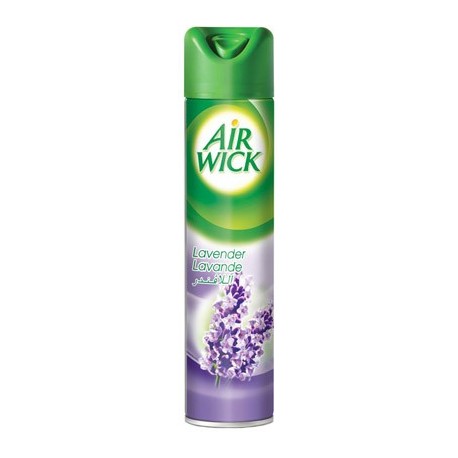
6. Air Freshener
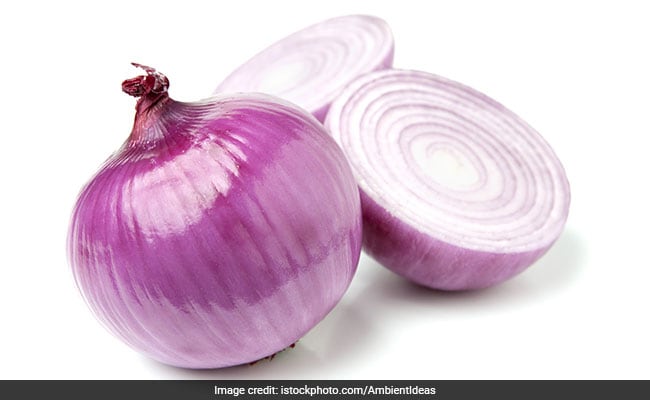
7. Onion
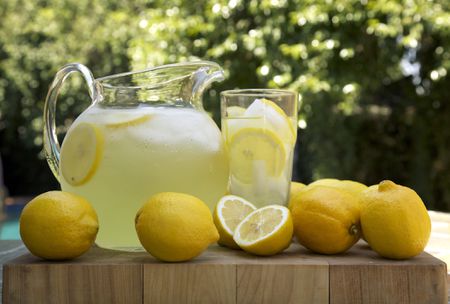
8. Lemonade
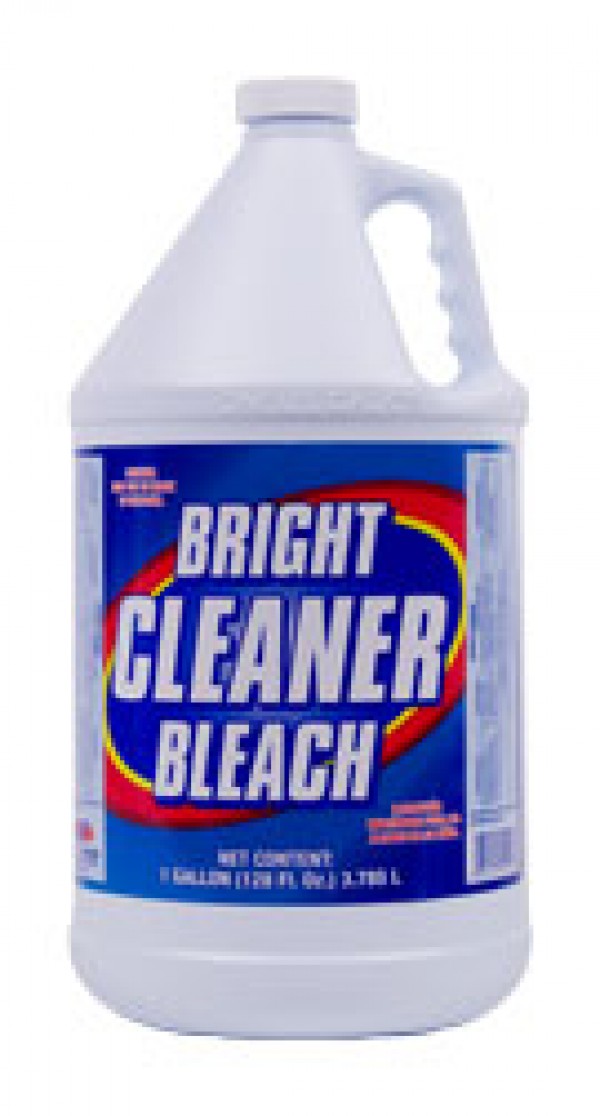
9. Bleach
10. Baking Soda
   
  So for this one we have to research if that image is a solid, liquid or a gas and research what is the chemical Ingredients.

Name
Chemical Ingredients
Image
Solid/ Liquid/ Gas?
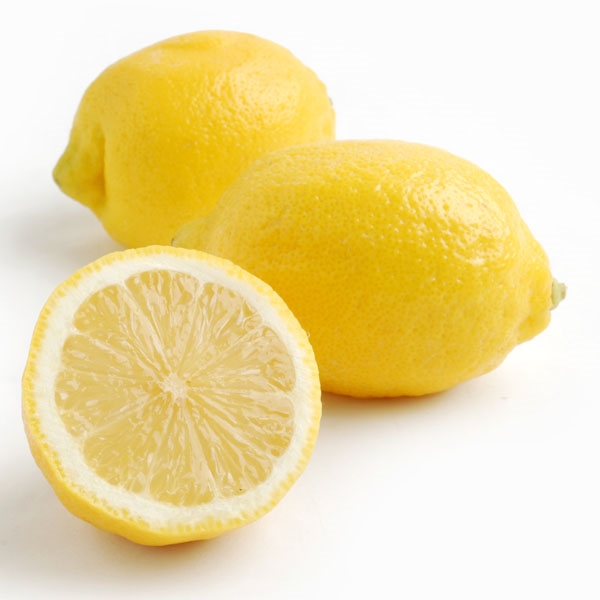
Lemon
Citric Acid.
Image result for lemon
Liquid
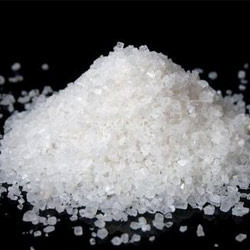
Salt
Sodium Chloride
Related image
Solid , soluble
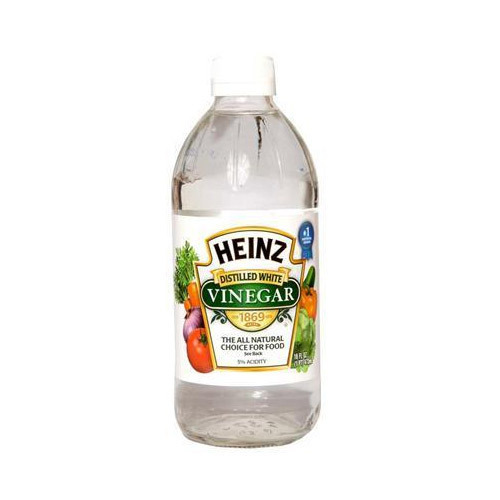
Vinegar
Acetic acid.
Image result for vinegar
Liquid
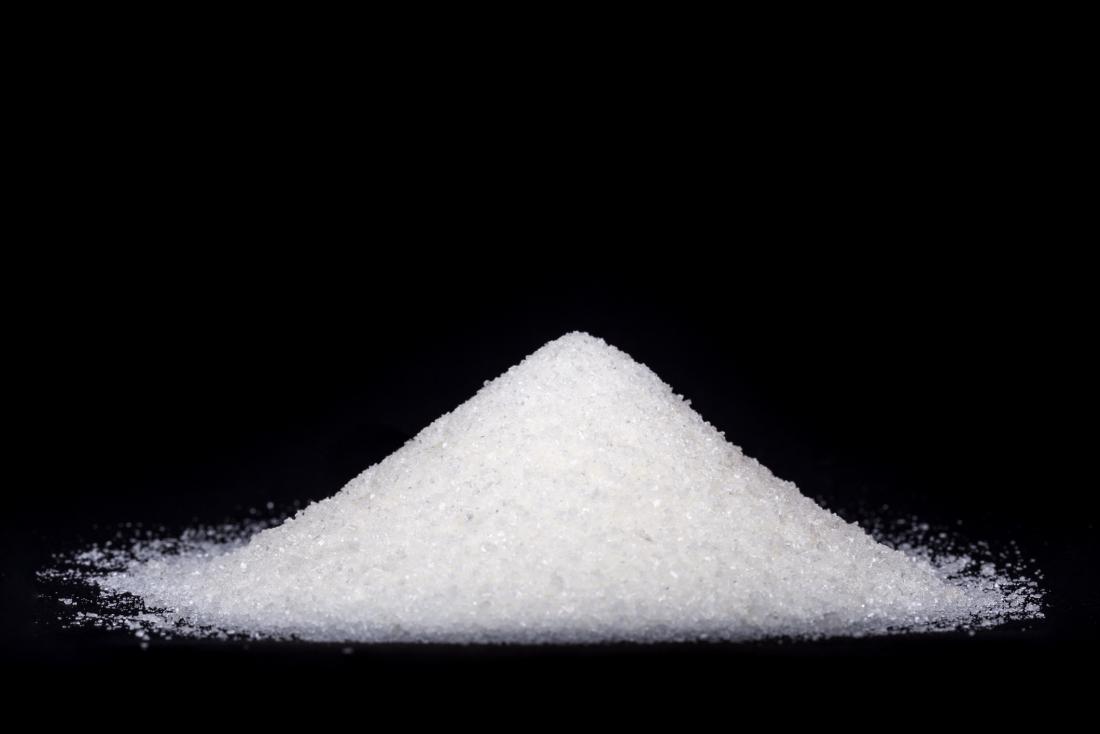
Sugar
lactose
Image result for sugar
soluble
Air Freshener
Phthalates, alpha-pinene
Image result for air freshener
Liquid, gas
Onion
acid
Image result for onion
gas
Lemonade
High fructose
Image result for lemonade
liquid
Bleach
Hydrogen peroxide
Image result for bleach cleaner
liquid
Baking soda.
Sodium bicarbonate
Image result for baking soda
soluble


    Also the exciting part is when Mr Palmer show a experiment.( Sorry don't have any picture of it)
  
  Materials: 
Baking soda
Vinegar
Water bottle that is empty 
And a Ballon.

 Method of the vinegar and the baking soda:

Put 12 to 1 ratio of vinegar and carefully put it in the container where the baking soda is meant to be placed in.

Observation of reaction:
When you adding the vinegar to baking soda it gives you an immediate reaction. Adding them together the reactions is delayed but then the reaction will fizzes the amount. If you put more vinegar is better but if you don’t put a lot it will not that kinda bit work, a 12 to 1 ratio of vinegar to baking soda it will cause a overload bubbled and fizzed reaction.